Tour: Miami Design District Museum Garage
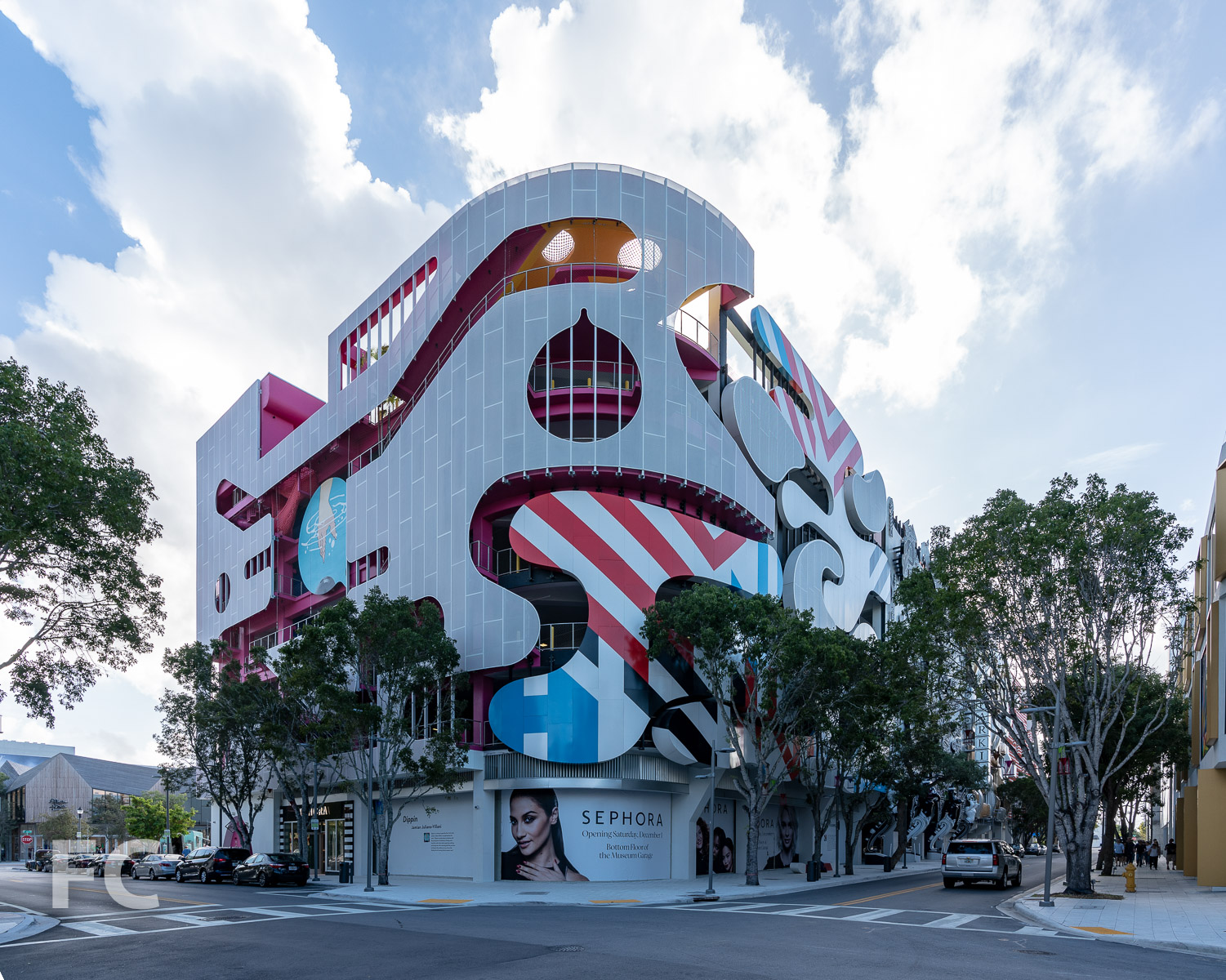
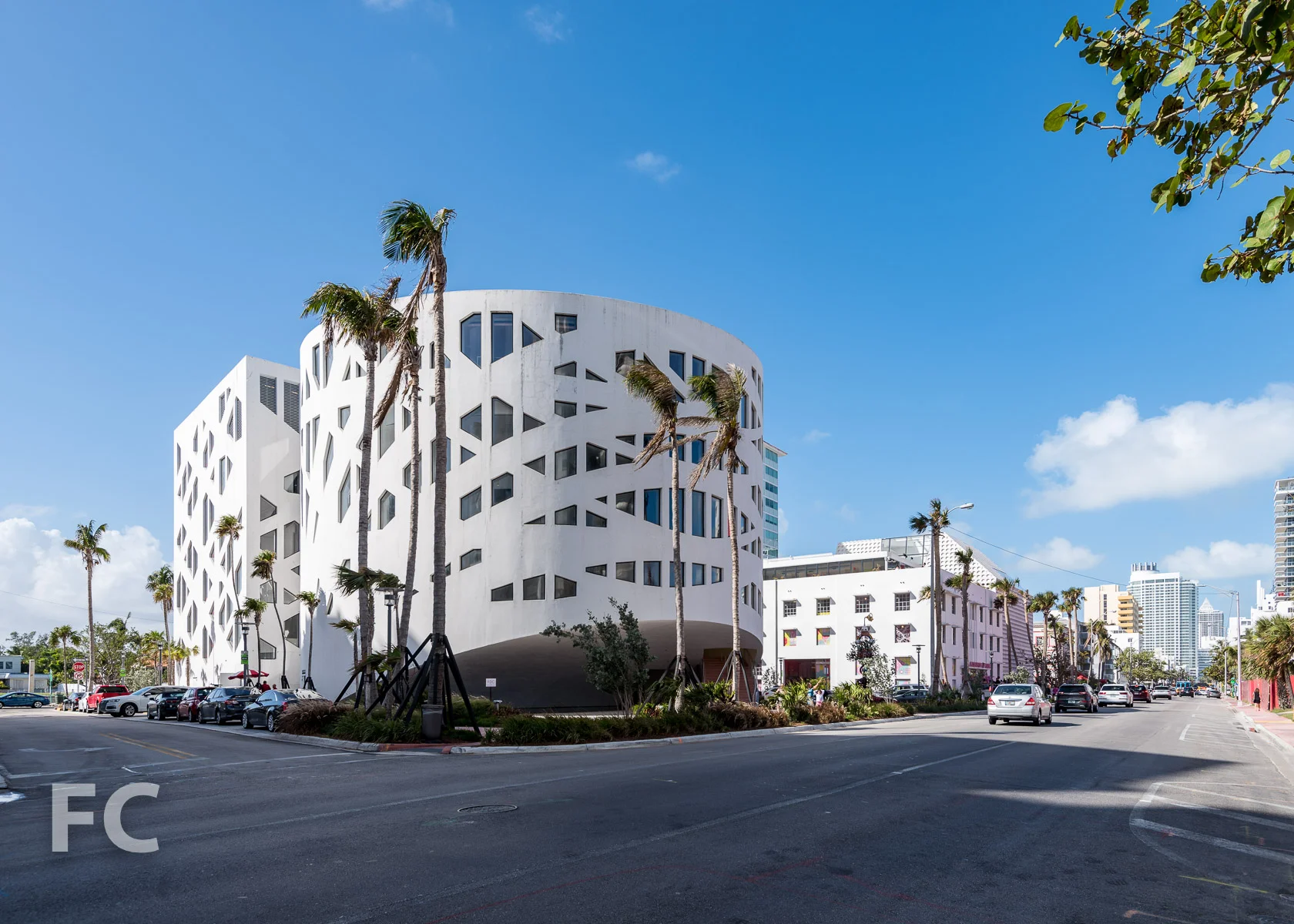
Miami Design District’s latest garage has opened to the public. The project is a collaboration between WORKac, J. Mayer H., Clavel Arquitectos, Nicolas Buffe, K/R Architects, and Sagmeister & Walsh. Each firm has designed a portion of the garage’s facade to produce the effect of a collage spanning the entire enclosure.
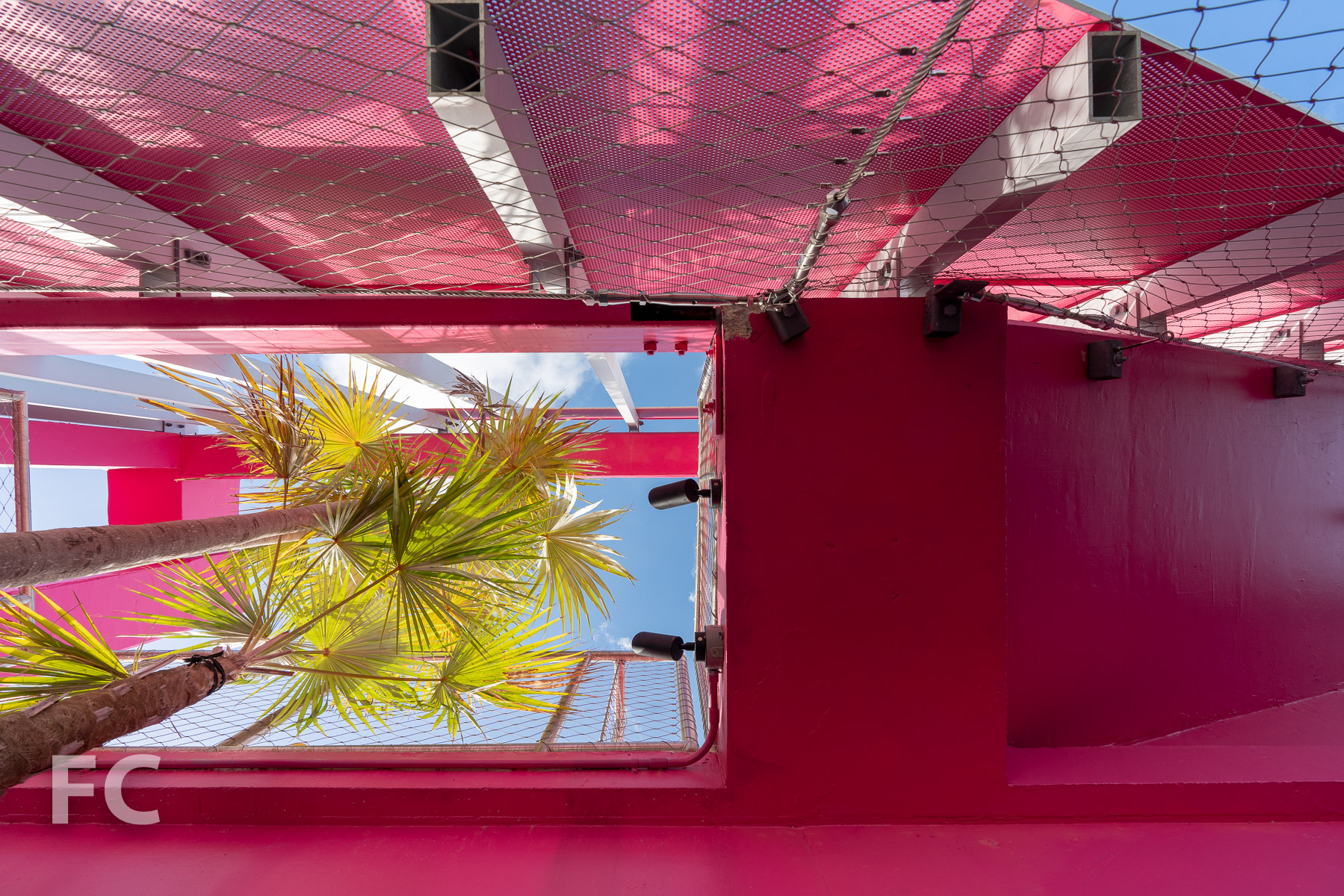
WORKac’s facade consists of a four foot thickened space that allows for a vertical progression of public spaces, including a graffiti art gallery, children’s play area, a garden, a DJ platform, lending library, listening lounge, fountain, bar, car washing/charging station, and space for pets.
Architects/Designers: WORKac, J. Mayer H., Clavel Arquitectos, Nicolas Buffe, K/R Architects, and Sagmeister & Walsh; Program: Parking Garage; Location: Miami, FL; Completion: 2018.


Construction Update: Kew Gardens Hills Library
Northwest corner.
Construction is wrapping up at WORKac's Kew Gardens Hills Library in Queens, a replacement of an older library in the neighborhood. The one-story structure is clad in GFRC (Glass Fiber Reinforced Concrete) panels cast in a curtain-like form of vertical folds. This solid surface pulls up at the northwest and southwest corners to allow for a glass façade that provides light and views for the open rooms for adults, teens, children and staff that line the perimeter. The customary book shelves occupy the center and east perimeter of the interior.
North façade.
Northwest corner.
Close-up of the GFRC façade panels.
Library entrance.
Library entrance.
West façade.
Looking up at the GFRC panels on the west façade.
West façade.
Close-up of the façade and green roof.
Southwest corner.
Architect: WORKac; Client: NYC DDC; Program: Library; Location: Kew Gardens Hills, Queens, NY; Completion: Fall 2017.
Edible Schoolyard at P.S./M.S. 7
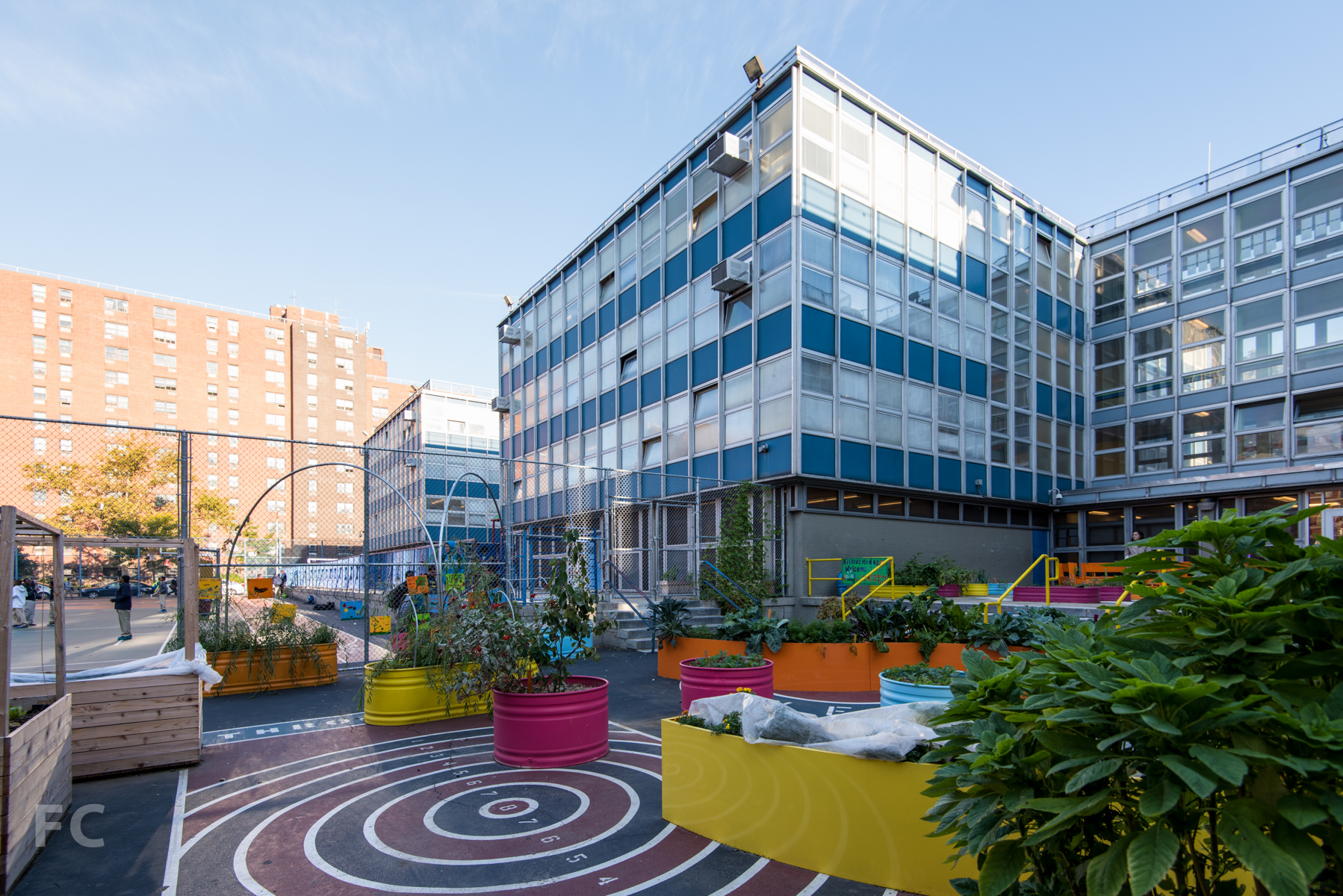
A garden has sprung up on the schoolyard pavement at P.S./M.S. 7 in East Harlem. The garden is the second project from Edible Schoolyard NYC, a nonprofit organization that partners with public schools to build gardens and kitchen classrooms to further their mission of empowering students to make healthier food choices. The New York organization is an offshoot of the edible schoolyard program that began with a school in Berkeley, California. The first project in New York, a half-acre organic garden and kitchen classroom building located at P.S. 216 in the Gravesend section of Brooklyn, was started in 2010 with the design help of architecture firm WORKac.
The entry to P.S./M.S. 7 from East 120th Street.
With the location of the second garden project in the heart of East Harlem, the organization had a greater challenge for space than in Brooklyn. Once again, the services of WORKac were called on to design the components and, in the process, develop a common language that could serve as a brand identity for Edible Schoolyard NYC. Given the time constraints on construction with an active school, the project has been divided into phases.
Concept Diagram of all elements. © WORKac
The first phase focused on converting a portion of the paved schoolyard into a teaching garden. The space is activated by colorful planters in a variety of shapes, including circles, rectangles and “wiggles,” that are spread out over the lower courtyard. According to the architect, a low cost strategy of using inexpensive prefabricated feeding troughs as planter beds allowed them to produce a design that provided a variety of shapes and colors. For a communal gathering space, bright orange benches are arranged into the letter “C.”
The lower courtyard prior to transformation. © WORKac
The teaching garden in the lower courtyard.
The teaching garden in the lower courtyard.
The teaching garden in the lower courtyard.
Plan (left) and aerial rendering (right) of the teaching garden. © WORKac
Planters Catalogue. © WORKac
Wiggle planter in the teaching garden.
Box planter in the teaching garden.
Planter in the teaching garden.
Plus planter in the teaching garden.
Plant signage.
Plant signage.
Dot planters.
C shaped gathering space.
For the second phase, slated to start at the end of the 2014-2015 school year, a greenhouse and rooftop garden will be added to the second floor roof of the cafeteria, with a connecting stair to the ground level garden. The greenhouse façade will be clad with tiles that create a flower pattern similar to the greenhouse built for the Brooklyn garden. A cistern will be located inside the greenhouse that collects the rainwater from its roof and activates a flower shaped waterwheel. Also included in this phase is the build out of the second floor kitchen classroom next to the rooftop garden and nearby office space.
Aerial view of model depicting teaching garden, greenhouse and rooftop garden. © WORKac
Elevation of greenhouse facade and stair. © WORKac
Plan of greenhouse. © WORKac
Axon of greenhouse structure. © WORKac
Cistern details. © WORKac
Plan of kitchen classroom. © WORKac
Temporary kitchen classroom.
Architects: WORKac; Client: Edible Schoolyard NYC; Program: Education; Location: East Harlem, New York, NY; Completion: 2015.
Edible Schoolyard at P.S. 216
Tour:
Tucked away behind P.S. 216 in Gravesend, Brooklyn is the first Edible Schoolyard project in New York City. Designed by WORKac on a portion of the school's parking lot and completed in late 2013, the project followed their successful MoMA P.S. 1 installation, Public Farm 1, in the summer of 2008 as part of the Young Architects Program. I had the pleasure of touring the project on an Open House New York tour led by architect Sam Dufaux from WORKac's office and Kathryn Heaberg from Edible Schoolyard NYC.
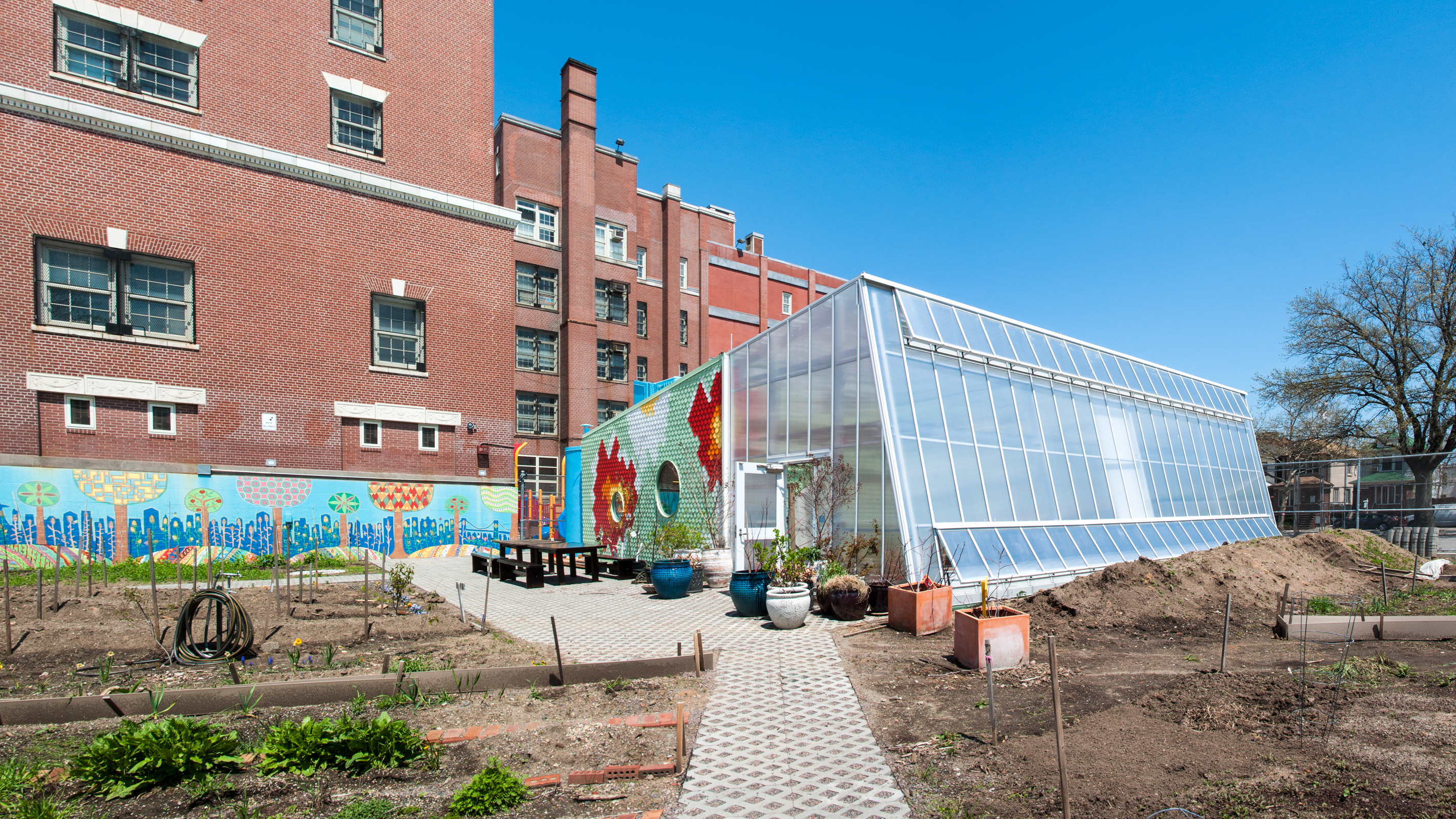
The project consists of several components, one of which is the Kitchen Classroom, the dominant piece of architecture on the site. This structure is composed of three primary elements: the greenhouse, the classroom, and the "Systems Wall."
At one end lies the 763 square foot greenhouse, an aluminum and poly-carbonate structure.
The 1,075 square foot center volume includes office space and the kitchen classroom, a space for teaching the students about food preparation amongst residentially scaled appliances to simulate the likely conditions in their own homes. Kitchen cabinets painted a thirteen color gradient of green line the walls, along with port hole windows that connect the students to the garden outside and to the greenhouse next door.
On the exterior, the middle volume stands out thanks to its fiber cement shingles, the colors of which evoke a floral mural. According to the architect, the inspiration for the floral facade comes from the 1970's project by Venturi, Scott Brown and Associates for a BEST Products showroom, where a floral facade was also employed.
At the other end lies the "Systems Wall," a bright blue rubber painted collection of volumes, where the infrastructure for the garden is stored. Located within the large, curved volume is a cistern for the collection of 1,550 gallons of rain water, the means of irrigating the garden. Also included in this zone is a tool shed, bathrooms, and the air conditioning units.
The other primary component of the project is the Half-Acre Garden, where students actively participate in raising the food used in the kitchen. Wonderful hand painted signs by the students demarcate the different plants in each planting bed, as well as rules and guidelines for the garden. Also interspersed throughout the garden are other student made crafts, such as garden gnomes and bird feeders made of milk cartons. A wooden gazebo at the center of the garden provides an outdoor gathering space for the class. Future plans for the project include a chicken coop for raising a dozen chickens, slated for later this summer.
Future plans for the Edible Schoolyard NYC project included expansion city-wide, with the next project slated for P.S. 7 in East Harlem. For its first project in Manhattan, the organization will build a rooftop garden along with a renovated classroom space within the school.
Architects: WORKac; Program: Education; Location: Gravesend, Brooklyn, NY; Completion: 2013.